
The Biggest Kettlebell Mistakes — and How to Fix Them
Kettlebell training is an incredibly effective way to build strength, improve conditioning, and develop athletic movement.
However, many people struggle to get the best results because they repeat common mistakes — often without realising their technique or programming needs work.
If you want expert guidance on kettlebell technique and progression, our kettlebell classes in Liverpool are designed to help you correct mistakes, move better, and train with confidence from day one.
In this guide, we break down the most common kettlebell mistakes and exactly how to fix them, so you can train safely and get better results from every session.
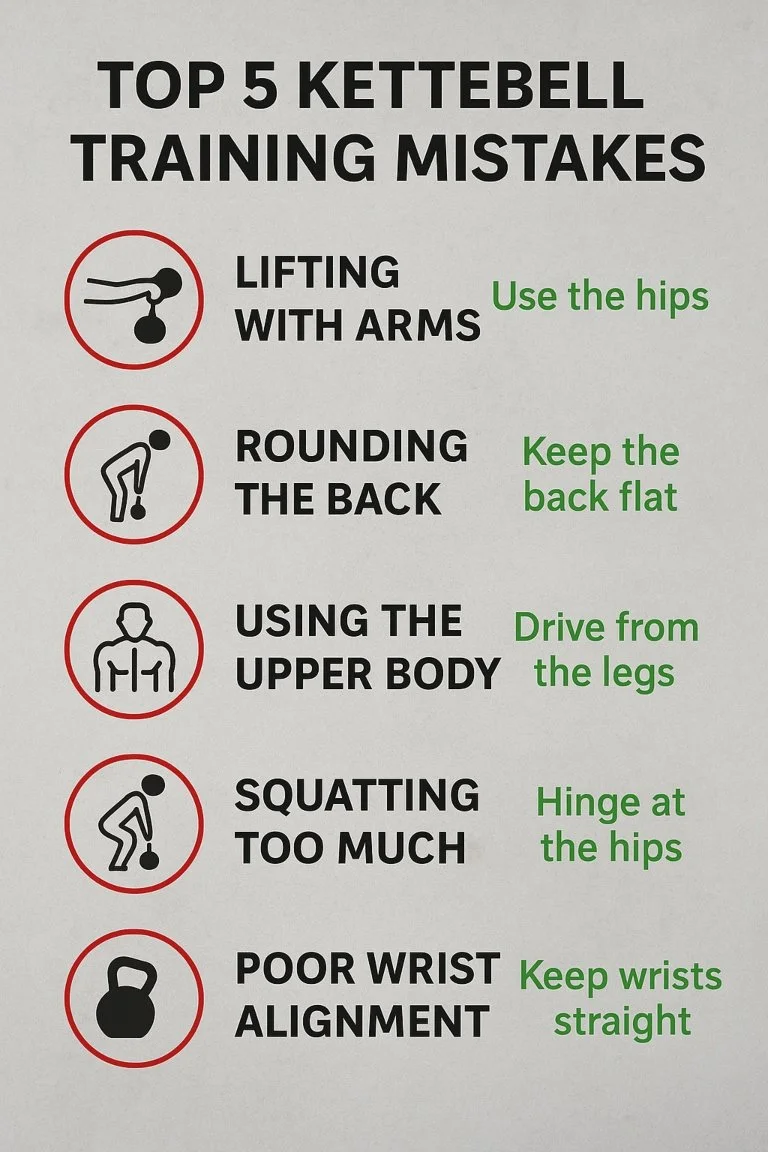
1. Using the Arms Instead of the Hips During the Kettlebell Swing
The kettlebell swing is a hip-dominant movement — but many people mistakenly try to lift the weight with their arms.
Why this is a problem
It overloads the shoulders and lower back.
It removes the explosive power that should come from the hips and glutes.
It turns a hinge pattern into an inefficient upper-body exercise.
How to fix it
Keep your arms relaxed — they act like hooks.
Drive the kettlebell with a strong hip snap.
Practice the hip hinge with a dowel or light weight before swinging.
2. Squatting the Swing Instead of Hinging
A common beginner error is turning the kettlebell swing into a squat by bending the knees too much.
Why this hurts your progress
You lose the powerful hinge mechanic that makes kettlebell swings so effective.
It reduces speed, efficiency, and power output.
It places unnecessary stress on the quads and knees.
How to fix it
Push your hips back, keeping only a slight knee bend.
Imagine “closing a car door with your hips.”
Film yourself from the side to check that your torso stays long and hinged.
3. Leaning Back at the Top of the Swing
Overarching at the end of the swing is extremely common — and risky.
What goes wrong
Excessive spinal extension stresses the lower back.
Poor core engagement reduces locking strength.
It becomes harder to maintain control as weight increases.
The correct fix
Stand tall with ribs down and glutes tight.
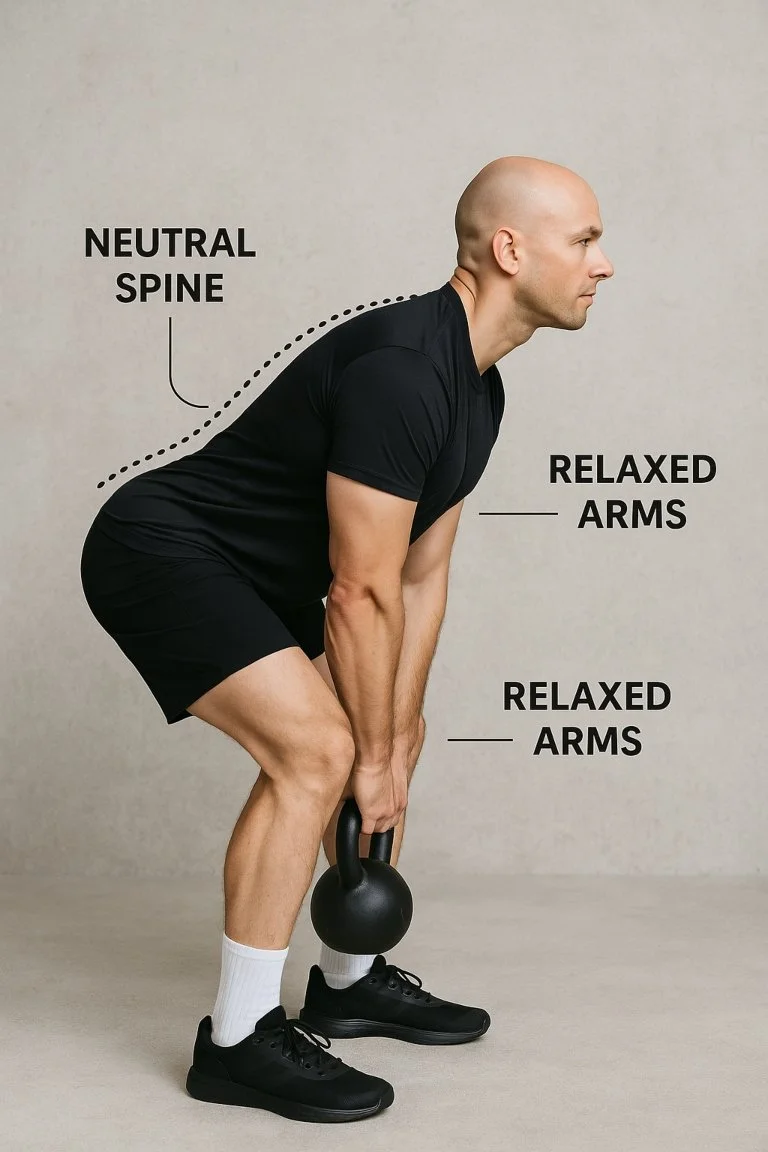
Keep your spine neutral — no leaning back.
Pause for a split second to feel the lockout position.
4. Choosing the Wrong Kettlebell Weight
Using a kettlebell that is too light or too heavy prevents proper technique.
Too light
Doesn’t provide enough resistance for the hips to generate real power.
Encourages arm lifting instead of hinging.
Too heavy
Causes form breakdown.
Increases injury risk.
Prevents clean, crisp movement patterns.
How to fix it
Use the lightest weight that still forces you to hinge explosively.
Only progress when technique is solid.
If in doubt, get a quick form check from a coach.
5. Skipping the Fundamentals
Many lifters jump straight into snatches, cleans, or flows without mastering the basics.
Why fundamentals matter
The hinge, deadlift, and front-rack positions are the foundation of all advanced kettlebell work.
Poor fundamentals lead to compensations, poor results, and potential injury.
Strong basics create long-term progress.
Fix it by
Practising the kettlebell deadlift before the swing.
Developing a solid rack position before cleans or presses.
Following a structured plan instead of random workouts.
If you’re unsure which movements to prioritise, these 10 kettlebell exercises every beginner should master provide a clear roadmap for building strong foundations.
How Often Should You Train With Kettlebells?
After correcting mistakes, the next common question is about frequency.
Understanding how often you should train with kettlebells helps you balance progress with recovery — so you improve without burning out.
Technique first. Consistency second. Progress follows.
Train Smarter, Get Stronger
Correcting these kettlebell mistakes will help you move better, lift more confidently, and get more out of every session.
The kettlebell is a powerful tool — but only when used with proper technique and progression.
The best way to fix kettlebell mistakes is to train with a coach.
If you’re ready to join a kettlebell class in Liverpool, you’ll get expert guidance, structured programming, and real-time feedback from day one.